




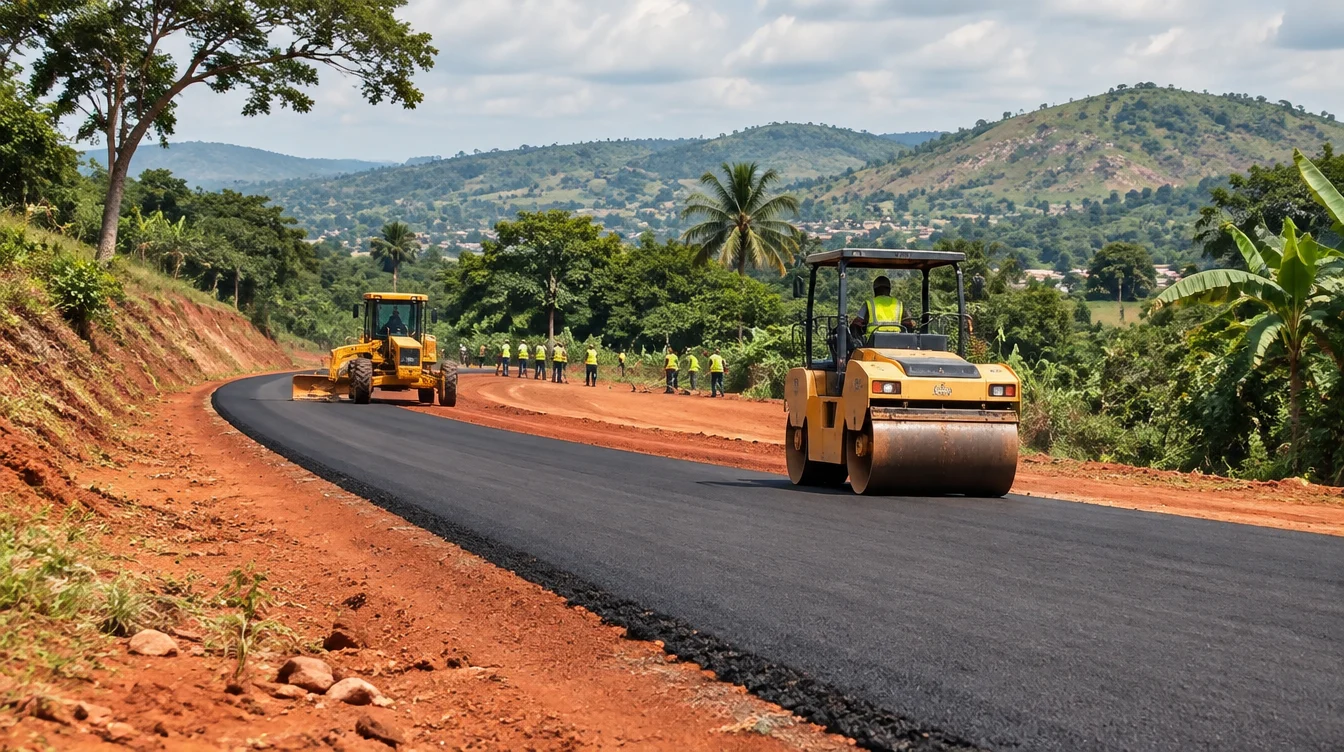
Driven by major corridor and rural road projects, the construction sector in the Central African Republic is posting clear growth. Data from the Bank of Central African States (BEAC) and contracts signed in 2026 confirm a substantial pipeline of projects, but also cost and schedule constraints that any investor or subcontractor must anticipate.
A sector growing by nearly 20%
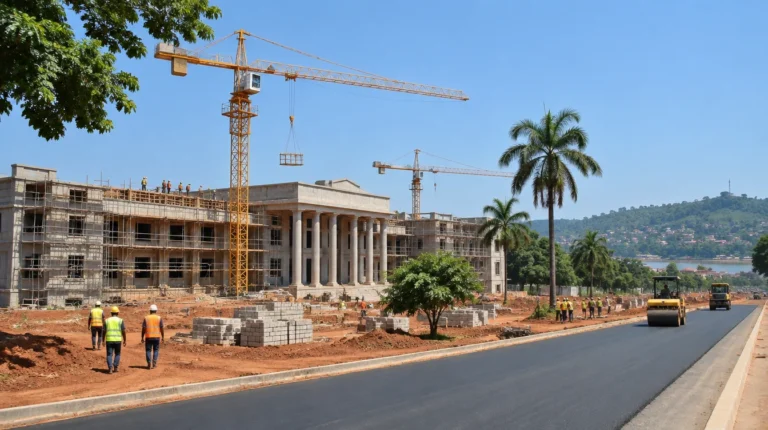
According to the BEAC economic outlook report analysed by EcoMatin on 25 August 2026, the revenue of the seven construction companies monitored rose from 8,524.3 million CFA francs in 2024 to 10,163.3 million in 2025, an increase of 19.2%. Works on several avenues in Bangui and the launch of corridor 13 explain this rise.
The Office national du matériel (ONM) remains by far the leading operator, with revenue of 5.46 billion CFA francs (+11.5%). Semence BTP multiplied its activity by nearly 2.5 (+148.7%) and the GER group grew by 11.9%. The BEAC considers the short- and medium-term outlook “promising”.
Major projects and their funders
According to the same source, the pipeline relies on three categories of funders:
- corridor 13, funded by the African Development Bank (AfDB) for about 174.9 billion CFA francs;
- World Bank projects, including the rehabilitation of rural roads in Paoua (Rural Connectivity Project) and the Pont Jackson – Croisement Oubangui – Kétté Nguéré road (1.233 billion CFA francs);
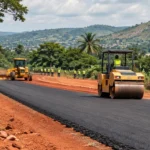
- the State’s own funds, about 2.4 billion CFA francs in total, for paving avenues in Bangui, the Mbaïki–Boda section and the maintenance of rural roads in Ouham.
On 5 June 2026, EcoMatin also reported the announcement of 90 million dollars in World Bank funding for roads and electricity, targeting in particular the Bangui–Garoua-Boulaï corridor and the expansion of the Danzi solar plant (about 15 MW). The World Bank’s active portfolio in the country is estimated at about 2.2 billion dollars, and the AfDB had about 583 million dollars committed across 19 projects at the end of 2025.
Rural roads and corridors: contracts for local companies
On 21 August 2026, the government signed two contracts to rehabilitate 173 km of rural roads in the north-west under the Regional Project for the Improvement of Road and River Transport Corridors in Central Africa (PRACAC): Bossangoa–Bouca (96 km) and Ndjoh–Bogangolo (77 km), for 6.833 billion CFA francs and a 12-month timeframe. The contractors, GER-RCA and Groupement Construction-RCA, are both local companies.
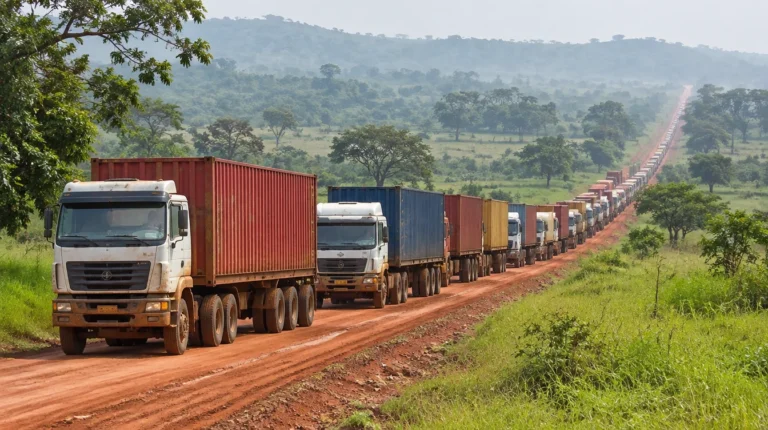
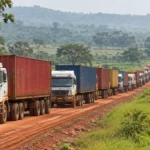
PRACAC also provides for paving the Bossembélé–Bossangoa road over about 150 km. More broadly, on 12 June 2026 the World Bank announced a 1.12 billion dollar programme for the Douala–Bangui corridor, more than 1,400 km long, through which most of the country’s foreign trade passes. The logistics issues of this route are detailed in our practical guide to the Douala-Bangui corridor.
Fuel, energy, materials: costs under pressure
The BEAC lists several constraints: high fuel costs, power cuts at peak hours, delays in material supplies due to the country’s landlocked position, late payment of some invoices by donors, rising equipment prices and an ageing fleet.
On fuel, a Russian donation of 30,000 tonnes of diesel, presented as covering nearly half of annual consumption, led to a 100 CFA franc drop in pump prices for petrol and diesel, but Bangui has experienced repeated shortages. Freight can reach 270 dollars per tonne on the Douala–Bangui corridor, with 9 to 12 days of transit under normal conditions.
One option: energy self-sufficiency for construction sites
Solar power and storage can reduce the dependence of site camps and concrete plants on the grid and diesel. Ongoing projects are presented in our article on solar energy in Danzi and Sakaï.
Where are the opportunities?
For foreign companies, three niches stand out: specialised subcontracting on the major corridors (engineering structures, studies, quality control), equipment rental and maintenance to renew an ageing fleet, and local production of materials to reduce dependence on imports.
Partnerships with Central African companies, which are already winning donor-funded contracts, make it possible to combine local knowledge with technical capacity. Payment terms, price indexation and force majeure clauses must be negotiated carefully.
Key takeaways
- Construction revenue (seven companies monitored by the BEAC): +19.2% in 2025.
- Corridor 13 funded by the AfDB for about 174.9 billion CFA francs.
- 173 km of rural roads awarded on 21 August 2026 for 6.833 billion CFA francs.
- World Bank programme of 1.12 billion dollars announced for the Douala–Bangui corridor.
- Fuel, energy and payment delays remain the main execution risks.
Frequently asked questions
Who funds the major road projects in the Central African Republic?
Mainly the African Development Bank, with corridor 13, and the World Bank, with PRACAC, the Douala–Bangui corridor and rural connectivity projects. The State also funds works from its own resources.
Can a foreign company access these contracts?
Yes, donor-funded contracts generally follow open tendering procedures. A partnership with a local company often makes execution on the ground easier.
What are the main risks for a construction project in the Central African Republic?
The cost and availability of fuel, power cuts, delays in transporting materials via the corridor and late payments are the risks most often cited by the BEAC.
The Central African construction sector is therefore benefiting from an unprecedented volume of funding, but profitability will depend on controlling logistics and energy costs.
SCADIS supports construction companies and investors in identifying contracts, finding partners and structuring their projects: discover our real estate and infrastructure practice in the Central African Republic.
Sources: EcoMatin, based on the BEAC (August 2026) · EcoMatin (August 2026) · EcoMatin (June 2026) Information up to date as of 28 November 2026.