




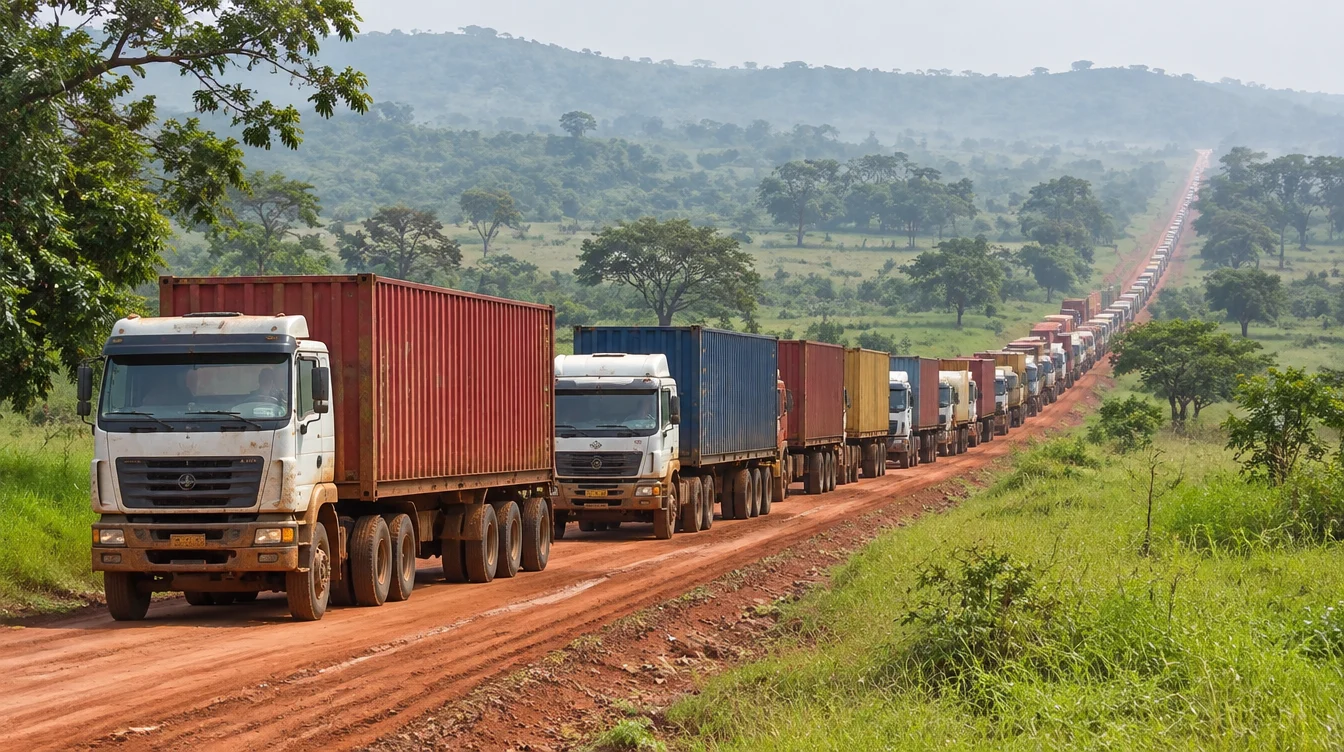
Freight to the Central African Republic depends almost entirely on a single road route, the Douala-Bangui corridor, making it a major cost and risk factor for any import-export business. Autumn 2026 was a reminder of this fragility, with a work stoppage by truckers at the border, while several donors are committing major funding to modernise the road. Here is what is changing for businesses.
A landlocked country, a vital corridor
According to the World Bank, more than 80% of the Central African Republic’s foreign trade passes through the corridor linking the port of Douala to Bangui, which is more than 1,400 km long. Under normal conditions, the journey takes 9 to 12 days, and transport costs can reach 270 dollars per tonne. The institution counts 38 checkpoints on the Cameroonian section, 17 of which involve informal payments.
A survey cited by Camer.be in October 2026 puts the cost of checks for a Douala-Bangui round trip at up to 225,000 CFA francs. These rarely documented charges come on top of freight costs proper and weigh on the final price of goods imported into Bangui. For the formalities and practical steps of a shipment, see our practical guide to the Douala-Bangui corridor.
Garoua-Boulaï: a stoppage that highlights the route’s fragility
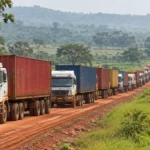
In October 2026, truckers staged a work stoppage of about two weeks at Garoua-Boulaï, the border post between Cameroon and the Central African Republic, to protest checks they consider abusive on the Central African side. Media reported more than a hundred trucks immobilised. According to Cameroon Tribune, delegations from both countries met at the Garoua-Boulaï sub-prefecture, in the presence of the governor of the East region and the general coordinator of the Land Freight Management Office (BGFT), and traffic resumed on the route to Bangui.
This episode is not isolated: similar blockades have disrupted supplies to the capital in the past. For an importer, it justifies building safety stocks and including a time margin in contracts.
Massive financing to modernise the road
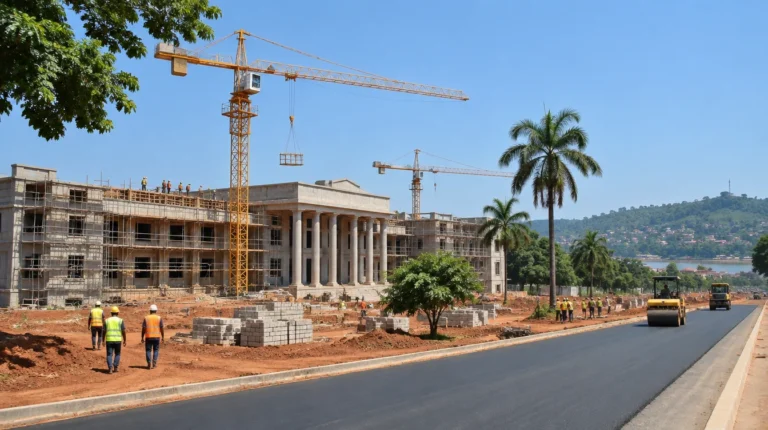
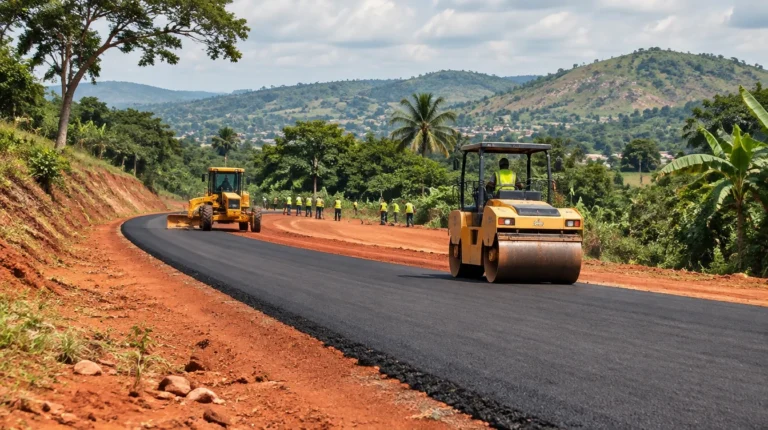
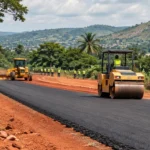
On 12 June 2026, the World Bank approved a 1.12 billion dollar multiphase programme to modernise the Douala-Bangui economic corridor, including a first phase of 525 million. This comprises 425 million dollars for Cameroon, 90 million dollars from IDA for the Central African Republic and 10 million for CEMAC. The programme includes climate-resilient road sections, axle-load control stations, logistics centres and trade facilitation measures. Financial Afrik specifies that the Central African component targets in particular the rehabilitation of the road towards Douala and sections of the Bossembélé-Bossangoa route.
On the Cameroonian side, the French Treasury’s briefs for the week of 9 November 2026 report a package of 174.6 billion CFA francs (266.2 million euros) to rebuild the Edéa-Douala section and build a second bridge over the Dibamba. It brings together AFD (125 million euros), the EIB (100 million) and the European Union (39.2 million). Approvals are expected in December 2026 for AFD and February 2027 for the EIB. These works concern the very entrance to the corridor, around the port of Douala.
Diversifying routes: river and energy corridor
Dependence on Douala is pushing the authorities to explore other routes. In April 2026, according to Agence Ecofin, the Central African Republic and Congo began discussions on a Pointe-Noire-Bangui energy corridor for the reception, storage and transport of petroleum products; the arrangements are yet to be defined by technical agencies.
On the river, the African Development Bank supports a regional project in the Ubangi basin, worth 46.5 million dollars, which notably provides for improved river navigation. The French Treasury’s briefs also mention the Zongo-Bangui bridge project towards the DRC, whose cost has been re-estimated at 221 million dollars, with works expected in the second half of 2027. Finally, a pact signed in May 2026 between the freight management bodies of Chad, Cameroon and the Central African Republic aims to digitalise the corridors by 2030, according to Tchadinfos.
What this means for investors
In the short term, freight costs and transit times will remain high: the projects financed in 2026 will take several years to deliver results. Companies should negotiate transport contracts with realistic delivery clauses, insure their goods over the entire journey, monitor news from the border and work with freight forwarders established on both sides. In the medium term, investments in logistics centres and digitalisation open up opportunities in warehousing, transport and transit services. Customs procedures are detailed in our article importing into the Central African Republic: formalities and costs.
Key takeaways
- More than 80% of Central African foreign trade passes through the Douala-Bangui corridor, over 1,400 km long.
- Expect 9 to 12 days in transit and up to 270 dollars per tonne, according to the World Bank.
- A truckers’ work stoppage of about two weeks disrupted Garoua-Boulaï in October 2026.
- A 1.12 billion dollar World Bank programme and 174.6 billion CFA francs for the Edéa-Douala section are under way.
- Alternatives are being studied: the Ubangi river, a Pointe-Noire-Bangui corridor and the Zongo-Bangui bridge.
Frequently asked questions
How long does it take to ship goods from Douala to Bangui?
According to the World Bank, the journey takes 9 to 12 days under normal conditions, excluding port formalities and possible border blockades.
How much does road freight to the Central African Republic cost?
The World Bank estimates that transport costs on the corridor can reach 270 dollars per tonne, plus sometimes informal checkpoint fees.
Which projects will improve the Douala-Bangui corridor?
A 1.12 billion dollar World Bank programme, including 90 million for the Central African Republic, and the reconstruction of the Edéa-Douala section financed by AFD, the EIB and the EU.
To organise your shipments, choose your forwarders and secure your goods all the way to Bangui, SCADIS supports you: discover our transport and logistics in the Central African Republic services.
Sources: Banque mondiale (June 2026) · DG Trésor (November 2026) · Cameroon Tribune (October 2026) · Financial Afrik (June 2026) · Camer.be (October 2026) · Agence Ecofin (April 2026) · AllAfrica / BAD (April 2026) · Tchadinfos (May 2026) Information up to date as of 29 November 2026.