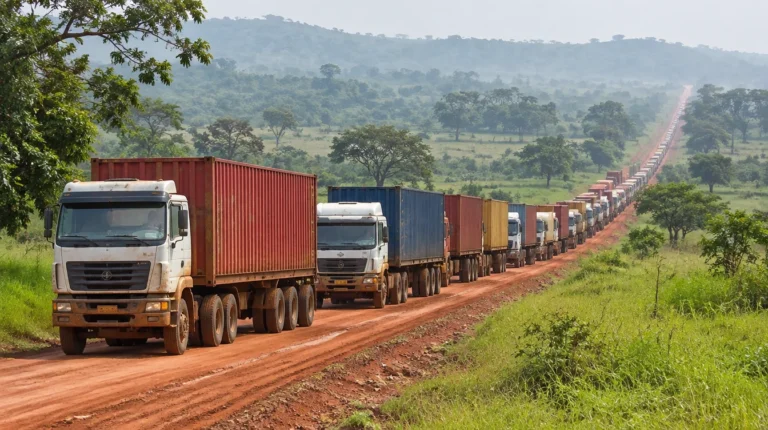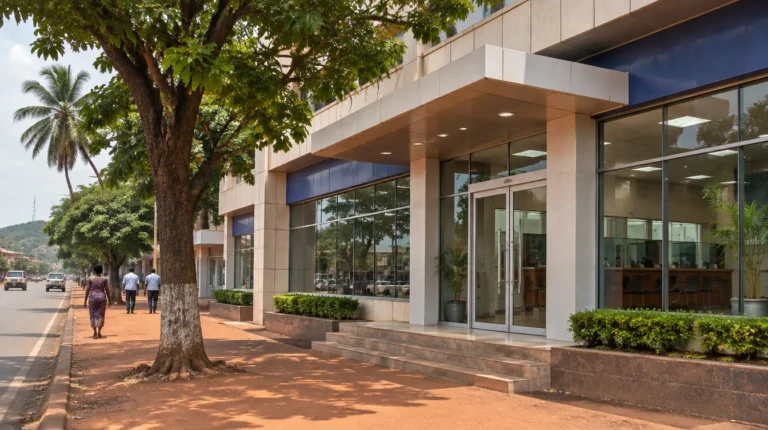








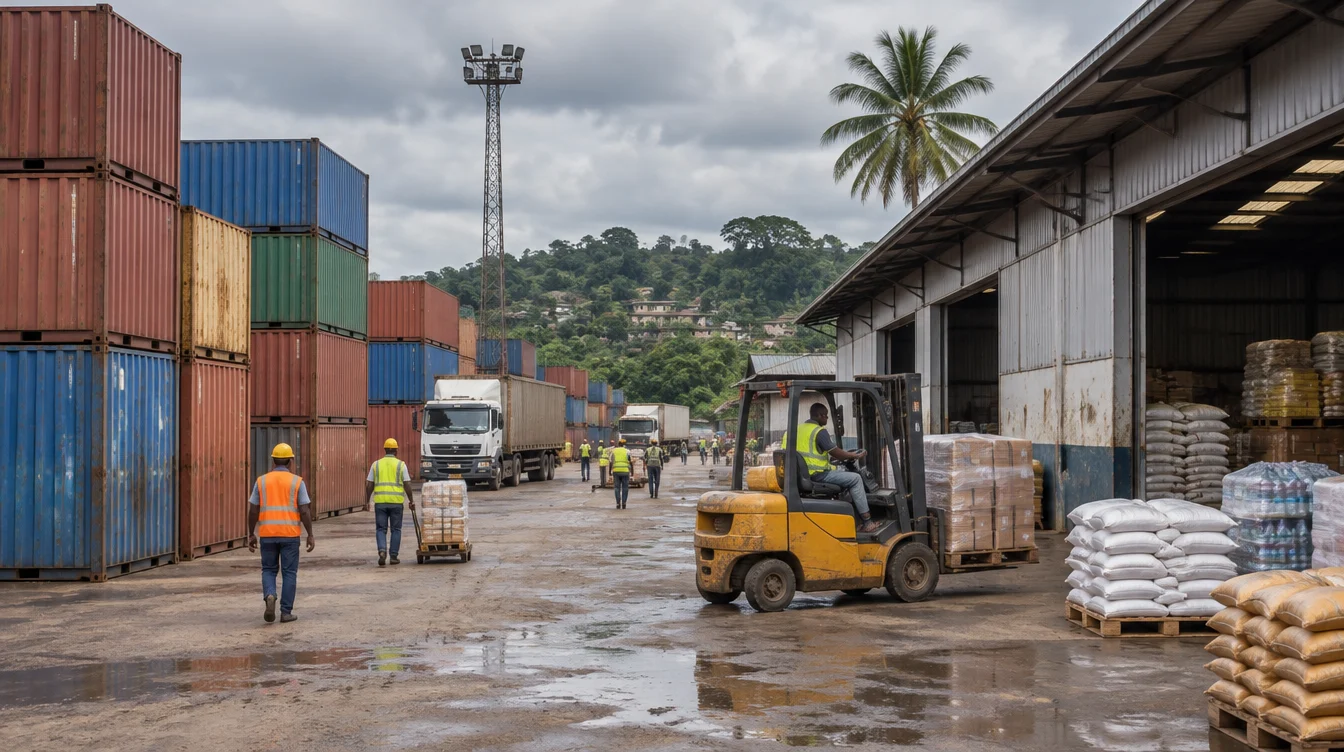
The Central African Republic imports most of what it consumes: according to the Ministry of Trade, nearly 80% of consumption needs are met by imports. An open market, provided you master the logistics chain and the formalities.
Imported products and market needs
Imports cover a wide range of goods: food and basic necessities, building materials, fuel, vehicles and spare parts, electrical and solar equipment, agricultural machinery and pharmaceuticals. Demand is concentrated in Bangui, but provincial towns also offer outlets.
For a foreign exporter, the challenge is not so much finding demand as delivering reliably, at a competitive price, in a market where logistics costs weigh heavily.
Customs formalities
An import into the Central African Republic goes through several stages:
- preparing the commercial documents: invoice, packing list, certificate of origin;
- transport documents: bill of lading to Douala, then inter-state transit documents;
- any specific certificates: health, phytosanitary or conformity, depending on the products;
- the customs declaration and payment of duties and taxes on arrival.
As a CEMAC member, the Central African Republic applies the zone’s common external tariff to goods from outside, while trade between member states benefits from preferential rules for products of community origin.
The authorities recently moved their transit desk from Douala to Béloko, on the border with Cameroon, to improve control and speed up operations.
The role of the freight forwarder
The freight forwarder is the importer’s key partner. It handles port clearance in Douala, organises transit, tracks the transport and clears customs in Bangui. Choose a forwarder present along the whole route, able to give you a detailed, item-by-item quote and track your shipments in real time.
Estimating the landed cost in Bangui
The final price of an imported product builds up step by step:
- purchase price from the supplier;
- sea freight to Douala and insurance;
- port and handling charges in Douala;
- transit and road haulage to Bangui (up to USD 270 per tonne according to the World Bank);
- import duties and taxes;
- local storage and distribution costs.
Add a margin for contingencies: delays on the corridor, container demurrage, exchange rate fluctuations outside the euro zone. As the CFA franc (XAF) is pegged to the euro, buying in euros limits currency risk.
Distributing once on the ground
Importing is only half the job. To sell, you need a network: wholesalers and distributors in Bangui, retail outlets, partners in the provinces, warehouses. A local representative also makes it possible to follow up payments and gather market feedback.
SCADIS supports companies with import-export, commercial representation and distribution in the Central African Republic. Discover our International trade and distribution page and our guide to the Douala–Bangui corridor.
Frequently asked questions
How do imported goods reach the Central African Republic?
The vast majority pass through the port of Douala, in Cameroon, then by road to Bangui along the Douala–Bangui corridor.
Do I need a freight forwarder to import into the Central African Republic?
It is strongly recommended: the forwarder handles port clearance, transit and customs, and secures lead times.
What customs duties apply in the Central African Republic?
The Central African Republic applies the CEMAC common external tariff to products from outside the zone, plus national taxes.
Sources: Africa24, share of imports and one-stop shop · AllAfrica, port of Douala and the Bata alternative (2025) · EcoMatin, transit desk moved to Béloko · Camer.be, corridor costs (World Bank). Information current as of 20 November 2026.