






Cassava is the staple food of the Central African Republic. Yet its processing remains largely artisanal and part of consumption is imported. For an agribusiness investor, it is one of the most obvious value chains to develop.
The country’s leading food crop
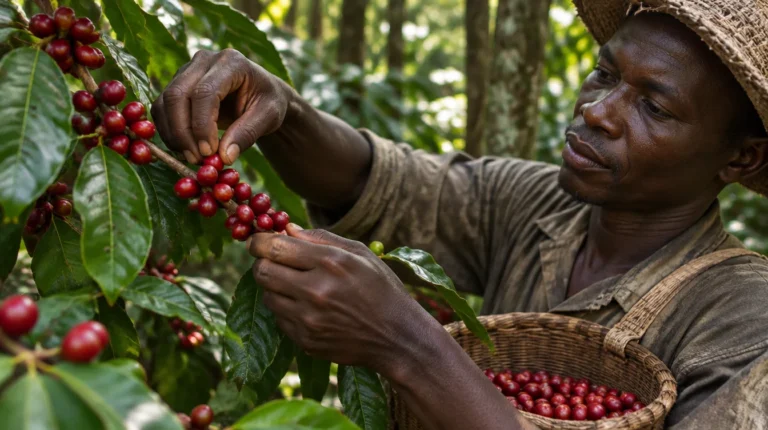
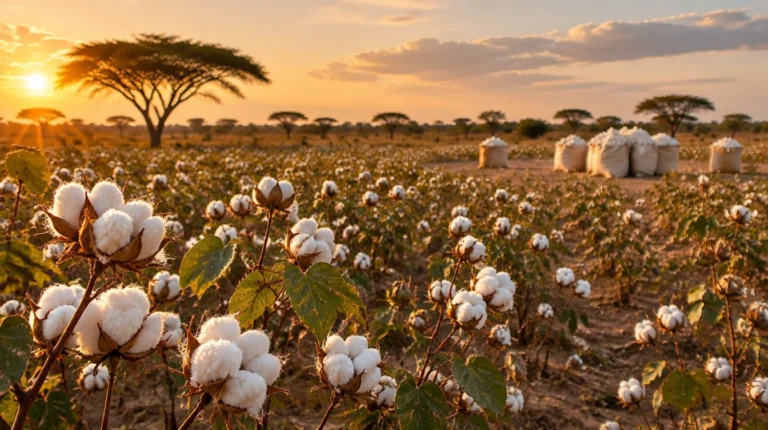
Cassava is grown in almost every region, intercropped with coffee in the forest zone and with cotton and cereals in the savannah. It provides the staple food of most households, eaten as flour (gozo), dried chips or leaves.
The country has considerable agricultural potential: about 15 million hectares of arable land according to the FAO, only a small share of which is cultivated.
Processing still done by hand
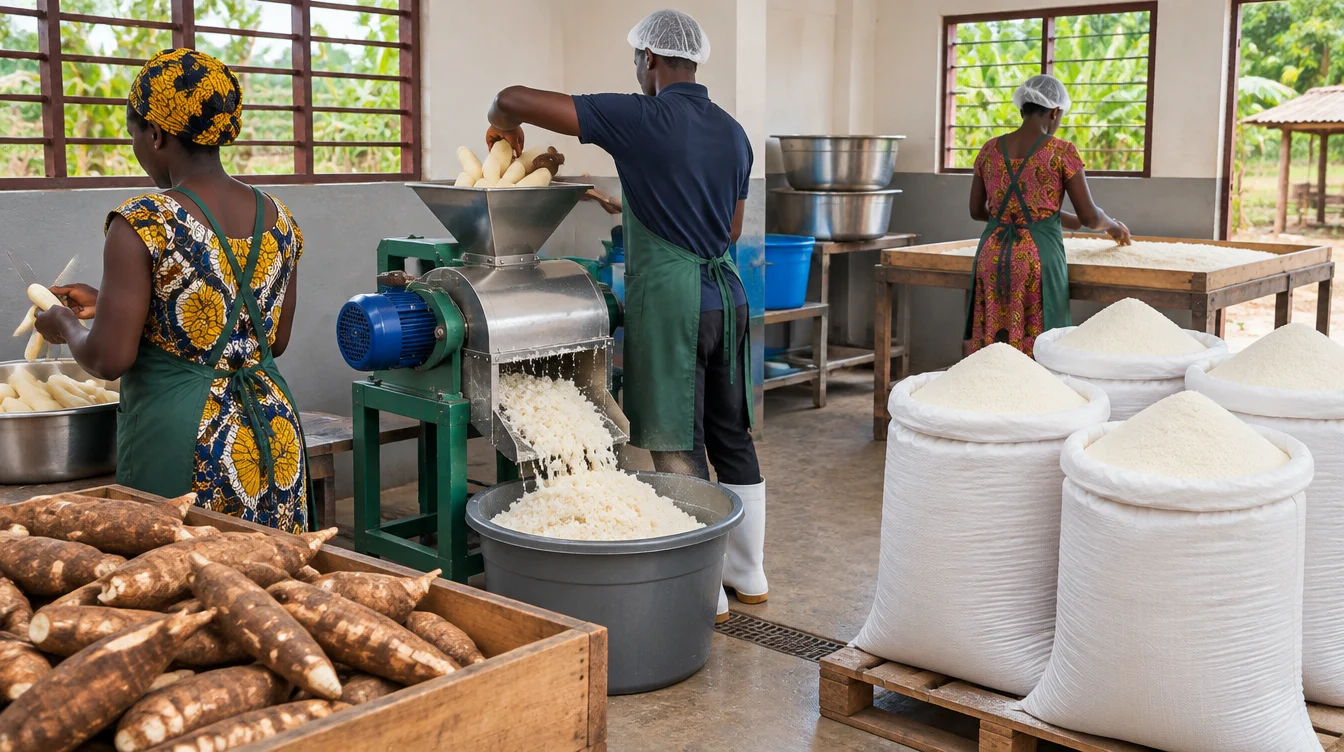
Processing relies mainly on manual labour: peeling, retting, sun-drying (sometimes directly on the tarmac), pounding or grinding. The result: uneven quality, heavy losses and low added value.
Despite abundant land, the country does not always meet its needs: in 2022, AFP reported that two-thirds of the cassava consumed was imported. Cassava diseases such as mosaic and brown streak, against which the FAO has run support programmes, also weigh on yields.
A well-designed processing unit meets a twofold need: securing local food supply and creating value locally.
Products in high demand
- cassava flour of consistent quality, for households, catering and shops;
- packaged dried chips, easier to store and transport;
- starch, used in the food and other industries;
- animal feed made from by-products;
- packaged products for Bangui’s retail chains.
A revival under way
The authorities have made cassava a priority value chain. The USD 98 million contract signed in March 2026 with the British group DSR provides in particular for industrial cassava processing units and milling centres, alongside programmes for cotton and coffee.
Setting up a processing unit
The keys to a successful project:
- secure supply: contracts with producer groups, support with healthy cuttings, possibly your own plantation;
- choose the right scale: start with a modular unit that can be expanded with volumes;
- solve the energy question: solar, biomass or hybrid for graters, presses and dryers;
- focus on quality and packaging to stand out from artisanal products;
- organise distribution to wholesalers, retailers and institutions.
SCADIS supports agribusiness projects, from identifying partners to marketing. Discover our Agribusiness page and our Energy solutions to power processing units.
Frequently asked questions
Why process cassava in the Central African Republic?
Cassava is the country’s staple food, but its processing remains artisanal and part of consumption is imported: demand for quality products is strong.
What products can be made from cassava?
Flour, dried chips, starch, animal feed and packaged products for retail.
What are the challenges of a cassava processing unit?
A regular supply of roots, energy for machinery and drying, quality and distribution.
Sources: Le360 Afrique / AFP (March 2022) · FAO, cassava programme in the CAR · FAO, CAR agricultural strategy · Bénin Web TV, DSR contract (2026). Information current as of 20 November 2026.