









Cotton was long the great cash crop of the Central African savannahs. The sector is now in deep crisis, but it is the focus of revival programmes that open up prospects for investors.
A long-central value chain
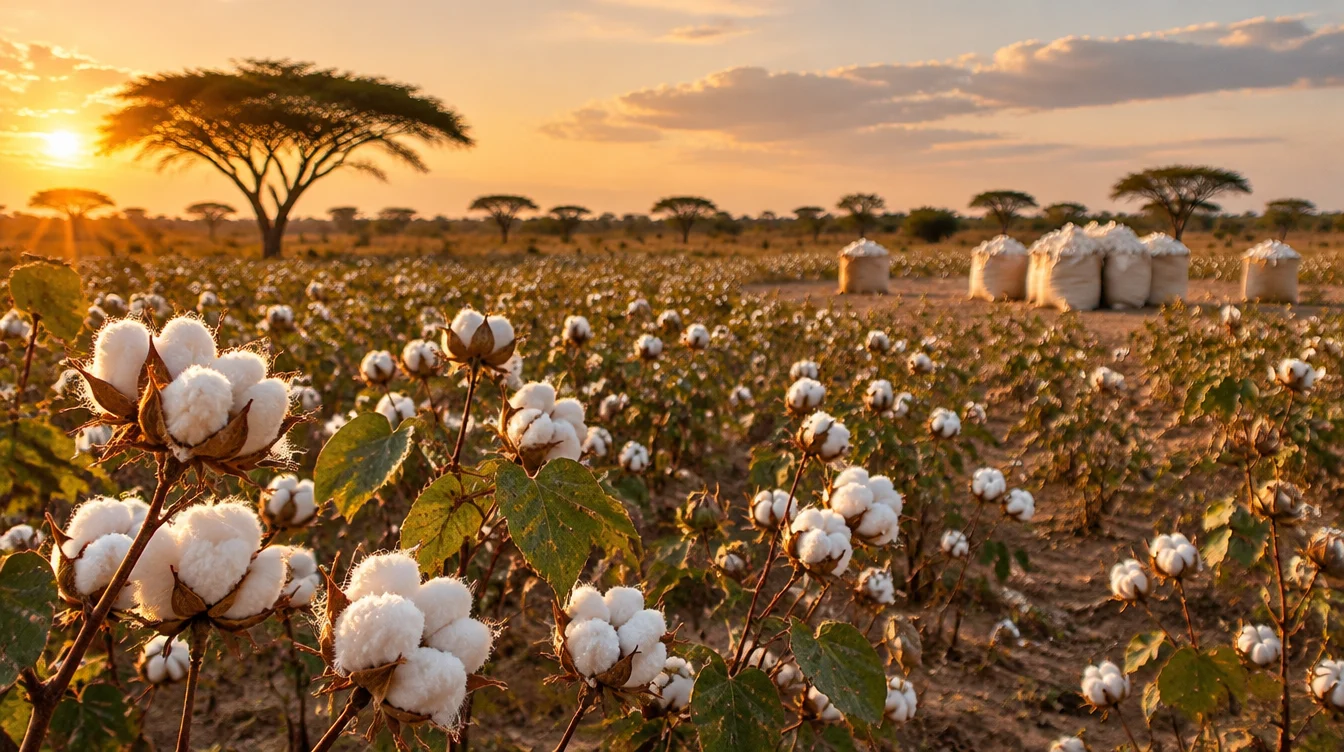
Introduced in the colonial era, cotton held first place in crop rotations in the savannahs of the centre and north-west, alongside cassava and cereals. In the 1960s, cotton production was already close to 30,000 tonnes a year. It shaped the rural economy of entire regions.
The figures of a decline
The recent situation is worrying. According to data published for 2025, seed cotton production fell to 221.4 tonnes, from 844.7 tonnes in 2024. After ginning, lint production by the Société cotonnière de Centrafrique (SOCOCA), the sector’s public operator, stood at 84.7 tonnes, compared with 339.5 tonnes a year earlier: a 75% drop.
Causes of the decline
Several structural factors weigh on the sector:
- payment arrears to growers and service providers, which discourage planting;
- deteriorating rural roads, which hamper the transport of seed cotton;
- a single ginning plant, in Bossangoa, with a capacity of 250 tonnes a day;
- a lack of inputs, quality seed and technical support;
- insecurity that has affected some production areas.
Mechanisation and ginning programmes
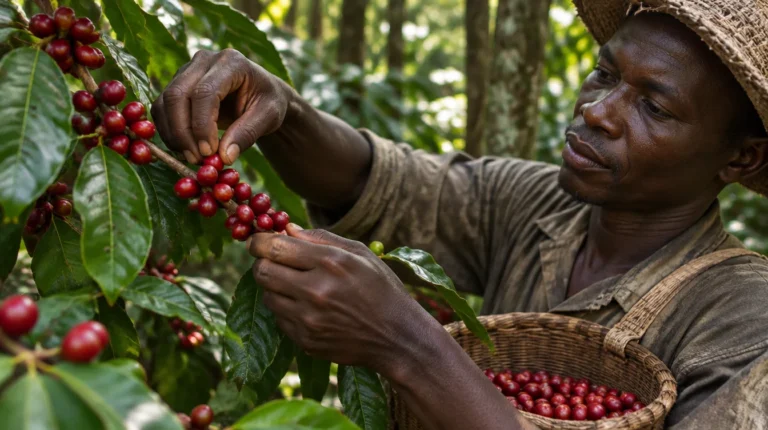
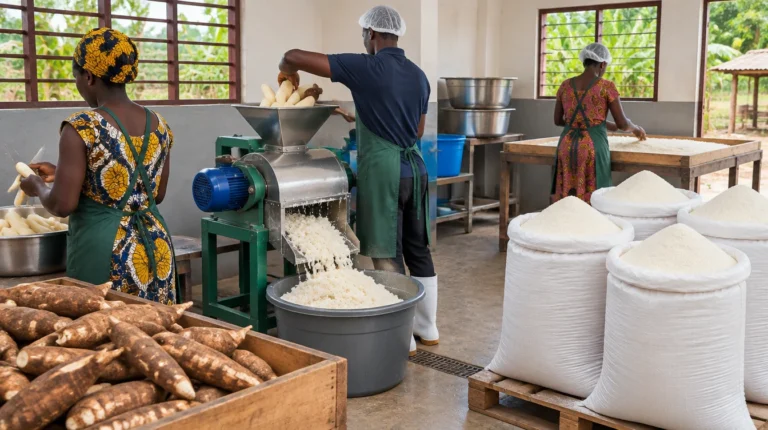
The authorities have launched a revival. The USD 98 million contract signed on 31 March 2026 with the British group DSR provides for new cotton ginning sites, alongside coffee processing stations and cassava processing units, as well as the supply of farm machinery.
Reviving cotton depends first on growers’ confidence: prompt payment for harvests, inputs available on time and passable roads.
Opportunities for investors
- ginning and collection logistics, to bring processing closer to production areas;
- supply of inputs and services: seed, fertiliser, mechanisation, agricultural advice;
- adding value to by-products: cottonseed for oil and oilcake for livestock;
- textile processing in the longer term, for the regional market;
- pre-financing of the season in partnership with buyers.
These projects require solid partnerships with the sector’s public players and growers’ organisations. SCADIS helps investors identify and structure agribusiness projects: discover our Agribusiness page and our article on Central African coffee.
Frequently asked questions
How much cotton does the Central African Republic produce?
In 2025, seed cotton production fell to 221.4 tonnes and lint production to 84.7 tonnes, a sharp drop compared with 2024.
Where is cotton ginned in the Central African Republic?
The country has only one ginning plant, in Bossangoa, with a capacity of 250 tonnes a day.
Can the Central African cotton sector be revived?
Yes, provided growers are paid promptly, inputs are supplied and roads are rehabilitated. A programme signed in 2026 provides for new ginning sites.
Sources: EcoMatin, SOCOCA production and exports · Sika Finance, DSR contract (March 2026) · L’Agronomie tropicale, historical data · Cahiers Agricultures (2020). Information current as of 20 November 2026.